
In October 2025, FGV presented its 2026-2030 Action Plan, outlining its roadmap for the next five years with an €839 million investment to maintain, modernize, and expand the existing rail network in Valencia and Alicante.
Ultimately, this represents a firm commitment to the future of metropolitan transport in Valencia and Alicante, requiring a modern system that meets the challenges of a dynamic and constantly moving society.
A Plan Divided into Six Pillars
The FGV Action Plan 2026-2030 is divided into six pillars, including the completion of the DANA-related works; the modernization of facilities and infrastructure; the addition of new trains; improvements to service offerings, stations, accessibility, and customer service; and the planning of new projects and the execution of new expansion works.
The first pillar includes the completion of the DANA-related works currently underway, such as the repair of tracks, offices, and workshops at València Sud; the new València Sud intermodal station; the new Control Center; and the refurbishment of all affected trains. This will be funded with €11 million.
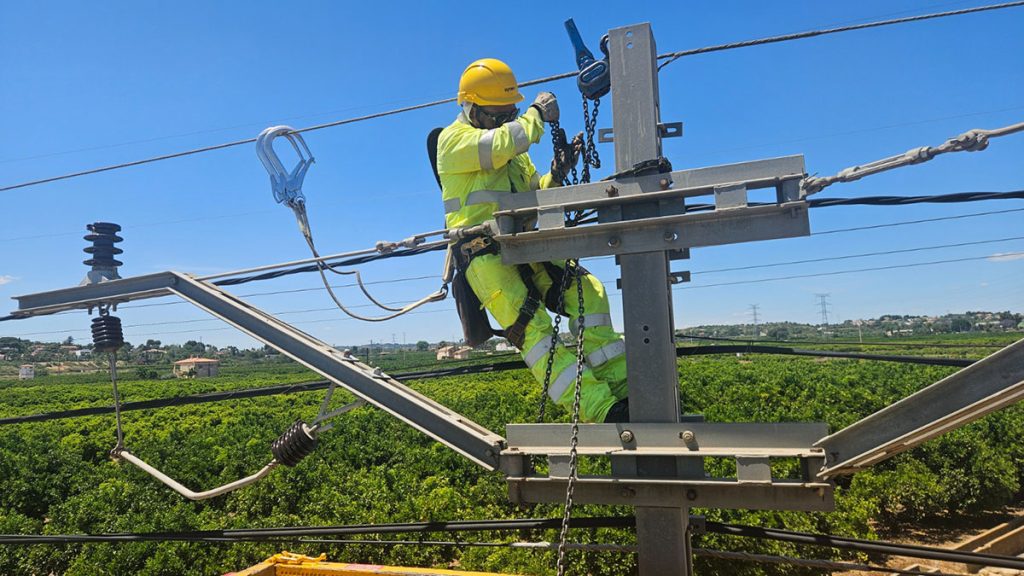
The second focus is modernizing the network’s facilities, infrastructure, and technical equipment through the renovation of tunnels and level crossings; signaling and communications for trams and above-ground sections of the metro network; the upgrading of electrical installations; and the expansion and improvement of maintenance workshops. These projects will have a budget of €275 million.
The third phase involves the acquisition of rolling stock, including 22 new trams manufactured by Stadler Rail Valencia, 16 of which will be for the province of Valencia and 6 for Alicante. Additionally, the plan includes the addition of metro units starting in 2029 to accommodate future expansions. A total of €185 million has been allocated for this purpose.
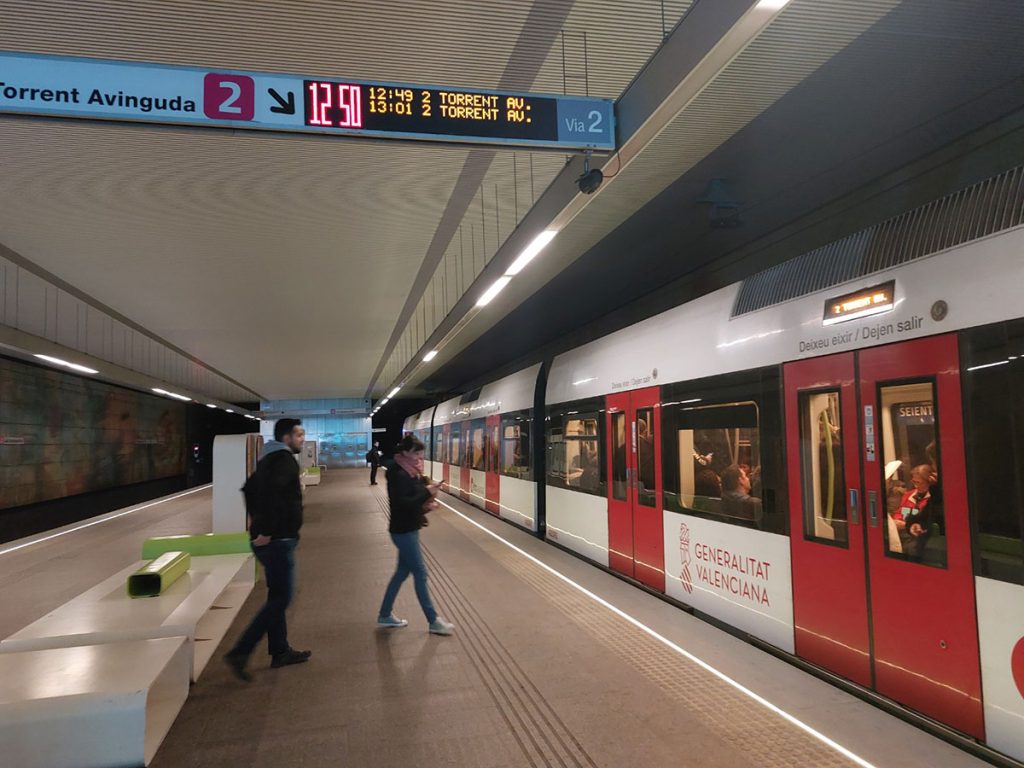
The fourth section will focus on stations, passengers, and accessibility, and will include the renovation of the underground stations on Metrovalencia Lines 1 and 2 and above-ground stations, a new Passenger Information System, new access platforms to trains and platforms accessible to people with reduced mobility, and new escalators and elevators at the Colón, Benimàmet, and Les Carolines – Fira Metrovalencia stations. These projects will have a budget of 90 million euros.
The fifth key area is improving service frequency by designing a new commercial offering based on initially redesigning routes to make them shorter, thus generating greater service regularity. This will facilitate the return to normal service and increase the possibility of making more trips by allowing for an increase in seat capacity. Furthermore, a base frequency of 12 minutes will be established across most of the above-ground network.
Part six focuses on the planning and expansion of the Metrovalencia network, doubling the track on Line 3 and launching the new Lines 11 and 12. Regarding the design and planning of new projects, the following will be considered: the undergrounding of the Paterna and Burjassot-Godella sections, the Empalme-Pont de Fusta connection, the capacity improvement of the tunnel between Alameda and Colón, the new Torrent station, the intermodal project, and the elimination of level crossings on the Torrent-Picassent section.
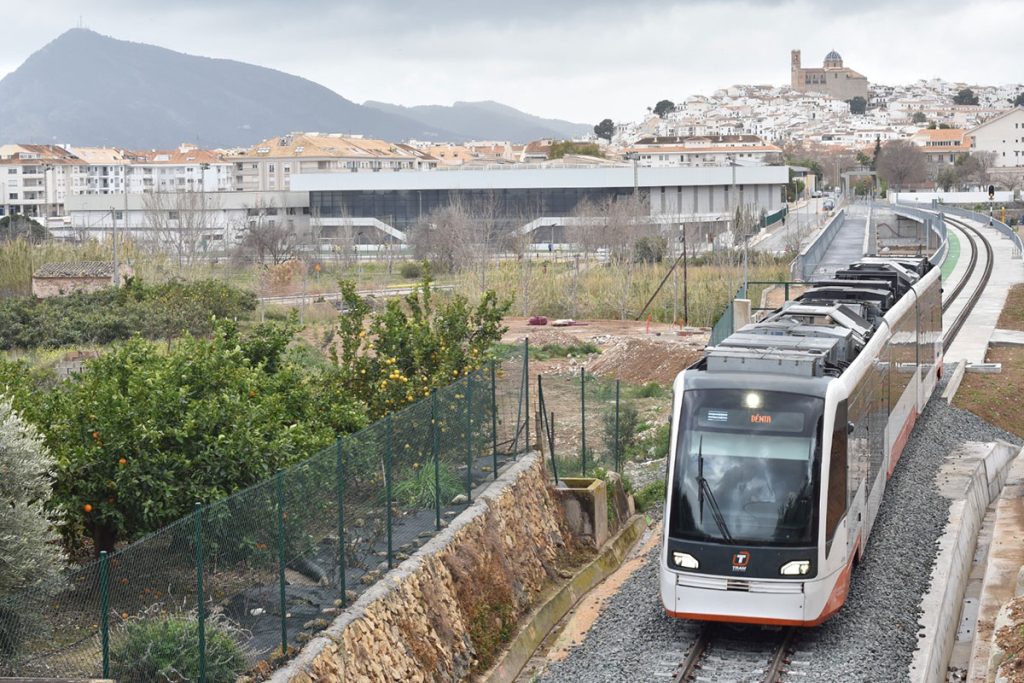
The Alicante Tram project includes the new Central-Intermodal Station, track doubling on the Hospital Vila-Benidorm line, the tramway conversion of Benidorm, the expansion of the Puerta del Mar stop, track doubling on the L’Albir-Altea line, the electrification of the Benidorm Intermodal-Garganes line, and the new Jesús Pobre-Pedreguer stop. Regarding the design and planning of new projects, the Dénia-Gandía connection and the expansion of the network south of Alicante will be considered.
The actions of the sixth axis, also including Alicante, will have a budget of 240 million euros.